Hospitals across Malaysia face a constant challenge: managing the flow of visitors while maintaining security, protecting patient privacy, and ensuring a smooth operational environment. Every day, hundreds of visitors pass through hospital doors—family members, friends, colleagues, and official guests—each requiring appropriate access, duration controls, and documentation. Without a structured approach, this process can become chaotic, compromising both security and the quality of care patients receive.
A hospital visitor management system is a digital solution designed to streamline and control visitor access, track movements, maintain compliance records, and enhance overall security within healthcare facilities. In Malaysia’s rapidly evolving healthcare landscape, implementing such a system has become increasingly important for hospitals seeking to improve operational efficiency and patient safety.
Why Hospital Visitor Management Matters in Malaysia
Malaysian hospitals, whether government or private institutions, operate under significant pressure to balance accessibility with security. Patients benefit from having loved ones nearby during their recovery, yet uncontrolled visitor access can introduce several challenges.
Security concerns are paramount. Unauthorised individuals entering restricted areas can compromise patient safety and sensitive medical information. Additionally, hospitals must comply with various regulations regarding patient confidentiality and data protection, making proper documentation essential.
From an operational perspective, managing visitor flow manually consumes considerable time and resources. Reception staff must manually log details, issue passes, and monitor departures—tasks that become increasingly difficult during busy periods. This manual approach is also prone to human error, leading to incomplete records and potential security gaps.
Common Challenges in Manual Visitor Management
Many Malaysian hospitals continue to rely on traditional, paper-based visitor management methods. While familiar, these approaches present several obstacles:
- Time-consuming processes: Manual registration requires visitors and staff to spend valuable time completing forms and issuing passes, creating bottlenecks at hospital entrances.
- Incomplete records: Paper logs are susceptible to missing information, illegible handwriting, and lost documentation, making it difficult to trace visitor movements if needed.
- Security vulnerabilities: Without proper digital tracking, unauthorised individuals may slip through undetected, and it becomes nearly impossible to identify who was present during specific time periods.
- Privacy concerns: Manual records containing patient names and visitor details can be easily exposed, violating confidentiality obligations.
- Resource drain: Staff members spend excessive time managing visitor administration rather than focusing on patient care.
- Compliance difficulties: Meeting regulatory requirements becomes challenging without reliable, auditable records.
Key Features of an Effective Hospital Visitor Management System
A well-designed visitor management system addresses these challenges through digital automation and centralised control. Understanding the key features helps hospital administrators make informed decisions about implementation.
Digital Check-In and Registration
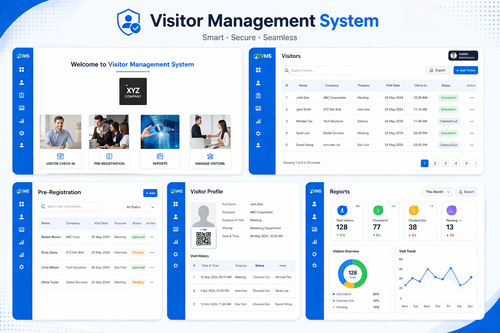
Modern systems enable visitors to check in digitally, either at kiosks, mobile devices, or reception terminals. This captures essential information—visitor name, contact details, patient name, visit purpose, and duration—quickly and accurately. Digital registration eliminates the need for paper forms and creates an immediate electronic record.
Automated Visitor Pass Generation
Upon registration, the system automatically generates visitor passes, often with identification numbers or barcodes. These passes can be printed immediately, reducing wait times and enabling staff to quickly identify authorised visitors within the facility.
Access Control Integration
Advanced systems integrate with access control mechanisms, allowing automatic granting or restriction of access to specific hospital areas. This ensures visitors only access designated patient rooms or public areas, keeping restricted zones protected.
Real-Time Tracking and Movement Monitoring
Digital systems track visitor movements throughout the facility, creating a real-time log of who is present and where. This capability is invaluable for security purposes and emergency situations.
Departure Logging
When visitors exit, the system automatically logs their departure time, ensuring accurate records of visit duration and facility occupancy. This automation eliminates reliance on visitors remembering to return passes.
Compliance and Reporting
Hospital visitor management systems generate comprehensive reports suitable for audits, investigations, and compliance verification. Administrators can quickly retrieve visitor records, generate occupancy reports, and demonstrate adherence to security protocols.
Patient Notification
Some systems can notify patients when visitors arrive, enhancing the patient experience while giving patients control over visitor access to their rooms.
Benefits for Malaysian Hospitals
Implementing a structured visitor management system delivers tangible benefits across multiple areas of hospital operations:
- Enhanced security: Digital tracking creates a complete audit trail, enabling rapid identification of all individuals present during specific timeframes.
- Improved efficiency: Automated processes reduce administrative workload, allowing staff to focus on patient care rather than visitor documentation.
- Better compliance: Reliable digital records demonstrate adherence to Malaysian healthcare regulations and data protection requirements.
- Reduced liability: Comprehensive visitor records protect the hospital in case of incidents or disputes.
- Enhanced patient experience: Streamlined visitor processes mean quicker access for legitimate visitors and less disruption to patient rooms.
- Data accuracy: Digital systems eliminate handwriting errors and ensure consistent information capture.
- Emergency preparedness: In emergencies, hospitals can quickly account for all persons within the facility.
Implementation Considerations for Malaysian Hospitals
Before selecting a visitor management system, Malaysian hospitals should consider several practical factors to ensure successful implementation.
Integration with Existing Systems
The chosen system should integrate smoothly with existing hospital infrastructure, including electronic health records (EHR) systems, access control systems, and security networks. This integration ensures seamless data flow and reduces implementation complexity.
Scalability
Hospitals should select systems capable of handling current visitor volumes while accommodating future growth. The system must perform reliably during peak hours when visitor numbers surge.
User-Friendliness
Both hospital staff and visitors should find the system intuitive and easy to use. Complicated processes lead to staff resistance and visitor frustration, undermining the system’s effectiveness.
Data Security and Privacy
Given the sensitive nature of healthcare data, the system must employ robust security measures, including encryption, secure authentication, and regular backups. Verify that the provider adheres to Malaysian data protection standards.
Support and Training
Reliable technical support and comprehensive staff training are essential for smooth implementation. The provider should offer ongoing assistance and updates to address evolving needs.
Cost-Benefit Analysis
While implementing a visitor management system requires initial investment, the long-term benefits—reduced administrative costs, improved security, better compliance—often justify the expenditure. Hospitals should evaluate total cost of ownership, including hardware, software, licensing, and training.
Regulatory Compliance in Malaysian Healthcare
Malaysian hospitals operate within a regulatory framework designed to protect patient rights, ensure safety, and maintain professional standards. While implementing a visitor management system, hospitals should ensure compliance with relevant guidelines and requirements. For specific regulatory requirements applicable to your facility, it is advisable to consult the latest guidance from the Ministry of Health Malaysia or relevant healthcare regulatory bodies.
A comprehensive visitor management system supports compliance efforts by creating auditable records, maintaining accurate documentation, and enabling quick retrieval of visitor information when needed for investigations or audits.
How Smart Touch Technology Can Help
Smart Touch Technology offers a web visitor management system designed to address the specific needs of Malaysian organisations, including hospitals. Our solution streamlines visitor registration, automates pass generation, integrates with access control systems, and maintains comprehensive audit trails.
With Smart Touch Technology’s web-based platform, Malaysian hospitals can implement a professional visitor management solution without extensive infrastructure changes. The system is designed for ease of use, enabling reception staff to manage visitors efficiently while maintaining detailed compliance records.
Whether your hospital is evaluating visitor management options for the first time or seeking to upgrade from manual processes, Smart Touch Technology provides a practical, reliable solution tailored to Malaysian healthcare environments.
Conclusion
Implementing a hospital visitor management system is a strategic investment in security, efficiency, and compliance. For Malaysian healthcare facilities facing the challenge of managing visitor flow while protecting patient safety and privacy, a digital solution transforms administrative burden into streamlined, documented processes.
By automating visitor check-in, generating digital passes, tracking movements, and maintaining comprehensive records, hospitals can focus resources on patient care rather than administrative tasks. The benefits—enhanced security, improved compliance, operational efficiency, and better patient experience—extend across the entire organisation.
As Malaysian hospitals continue to modernise, implementing a structured visitor management system is no longer optional but essential. Whether you operate a large government hospital or a specialist private facility, the right system enhances your ability to serve patients safely while maintaining professional standards.
To explore how a visitor management system can benefit your Malaysian hospital, contact Smart Touch Technology to discuss your specific requirements and discover how their web visitor management platform can streamline your operations.
Smart Touch Technology Pte Ltd
Singapore: www.smartouch.com.sg | +65-63964767 | sales@smartouch.com.sg
Malaysia: www.smartouch.com.my | +607-3889903 | sales@smartouch.com.my