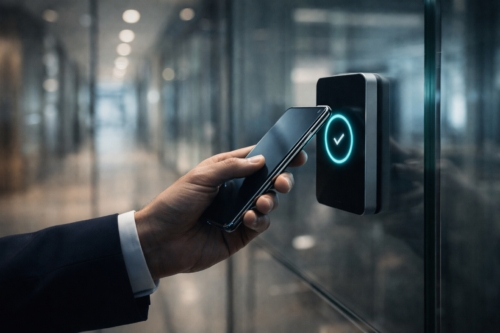
In today’s world, security is no longer limited to locks, keys, and security guards standing at entrances. Modern businesses, residential developments, schools, hospitals, industrial buildings, and government facilities all require smarter, faster, and more reliable ways to protect people, assets, and information. That is where an access control system becomes essential.
An access control system is one of the most effective security solutions for managing who can enter a building, room, gate, or restricted area. It replaces traditional mechanical keys with controlled, trackable, and customizable access methods. Whether we are securing a small office or a multi-site enterprise, door access technology gives us the ability to decide who enters, when they enter, and where they are allowed to go.
This complete guide explains everything we need to know about access control systems, how they work, their main components, types, benefits, and why they are now a critical part of modern security infrastructure.
What Is an Access Control System?
An access control system is a security solution that regulates and monitors entry to physical spaces. Instead of using ordinary locks and keys, it uses electronic credentials such as access cards, PIN codes, mobile phones, biometric fingerprints, or facial recognition to grant or deny entry.
In simple terms, an access control system answers three important questions:
Who is allowed to enter?
It identifies authorized individuals such as employees, visitors, tenants, students, contractors, or management staff.
Where are they allowed to enter?
It defines which doors, zones, floors, gates, or rooms they can access.
When are they allowed to enter?
It controls access by time and date, allowing entry only during approved hours or schedules.
This makes the system much more powerful than traditional locking systems. Instead of handing out physical keys that can be copied or lost, we can assign and revoke access instantly through software.
Why Door Access Control Is Important
Security threats today are more complex than ever. Businesses face risks such as unauthorized entry, theft, data breaches, vandalism, tailgating, and internal misuse. Residential properties also need protection against unwanted visitors and unauthorized access to shared facilities.
A door access control system helps solve these challenges by creating a structured and intelligent entry management process. It is not only about keeping intruders out. It is also about managing movement inside a property, protecting sensitive areas, and creating a safer environment for everyone.
For example, not every employee should have access to server rooms, finance offices, laboratories, or management areas. Similarly, not every resident or visitor should be allowed into utility rooms, rooftop spaces, or private building sections. Access control allows us to create clear rules without relying on manual supervision.
How an Access Control System Works
Although different systems vary in design and complexity, the basic working principle is straightforward.
When a person attempts to enter a door, they present a credential to a reader. The reader sends that information to the control panel or software platform, which checks whether the credential is valid. If access is approved, the door unlocks for a few seconds. If access is denied, the door remains locked.
At the same time, the event is recorded in the system log. This provides a full audit trail of entries, exits, denied attempts, and unusual activity.
This process happens within seconds and can be applied to a single door or thousands of doors across multiple sites.
Main Components of a Door Access Control System
To understand access control properly, we need to know its main building blocks.
1. Access Credentials
Credentials are what users present to gain entry. Common examples include:
- RFID cards
- Key fobs
- PIN codes
- Mobile app credentials
- QR codes
- Fingerprints
- Facial recognition
- Palm vein scans
Each type offers different levels of convenience, cost, and security.
2. Card Reader or Access Reader
The reader is installed near the door and is responsible for reading the credential. Depending on the system, it may be a card reader, biometric scanner, keypad, or mobile-enabled smart reader.
3. Access Control Panel
The control panel acts as the brain of the system. It receives information from the reader, checks permissions, and sends commands to lock or unlock the door.
4. Electric Lock or Magnetic Lock
Electronic locks are used instead of standard mechanical locks. Common options include:
- Electromagnetic locks
- Electric strikes
- Drop bolts
- Mortise locks
- Smart locks
The type of lock used depends on the door material, traffic volume, fire safety requirements, and level of security needed.
5. Management Software
The software allows administrators to create users, assign permissions, monitor activity, generate reports, and control doors remotely. Modern systems often include cloud-based dashboards for easier access from anywhere.
6. Exit Devices and Sensors
Exit buttons, request-to-exit sensors, door position sensors, and alarms are often included to ensure safe and compliant operation.
Types of Access Control Systems
There are several different types of access control systems, each suited to different environments and security needs.
Discretionary Access Control
In this model, the owner or administrator decides who gets access to a particular area. It is simple and common in smaller businesses, but it may not be ideal for high-security environments.
Mandatory Access Control
This is used in highly secure environments such as military, government, or research facilities. Access is based on strict policies determined by a central authority, not by individual managers.
Role-Based Access Control
This is one of the most popular approaches in commercial environments. Users receive access rights based on their role, such as manager, HR staff, technician, or visitor. It makes administration much easier because permissions can be assigned by job function instead of one person at a time.
Rule-Based Access Control
In this model, access is granted according to specific rules, such as time schedules, location, or special conditions. For example, cleaners may only enter from 8:00 PM to 11:00 PM, while contractors may access only one floor.
Types of Door Access Methods
Modern door access systems offer a wide range of entry methods. Each option has advantages depending on the building’s operational needs.
Card Access Systems
Card-based access remains one of the most widely used methods. Users tap or swipe a card to enter. It is affordable, fast, and easy to manage. Lost cards can be disabled immediately without changing locks.
PIN and Keypad Access
A keypad requires users to enter a code. This works well for smaller installations or areas where cards are inconvenient. However, codes can be shared, so security depends on good management.
Biometric Access Control
Biometric systems use unique physical characteristics such as fingerprints, facial features, or iris scans. These systems offer stronger identity verification because credentials cannot be easily shared or copied.
Mobile Access Control
Mobile credentials allow users to unlock doors using smartphones or smartwatches. This has become increasingly popular because it reduces the need for physical cards and improves convenience.
Multi-Factor Authentication
For high-security areas, systems can combine two or more methods, such as a card plus a fingerprint, or a mobile credential plus a PIN. This significantly increases protection.
Benefits of an Access Control System
An access control system offers much more than simple entry management. It provides a long list of security, operational, and administrative advantages.
Improved Security
This is the most obvious benefit. Only authorized individuals can enter protected areas. This reduces the risk of break-ins, unauthorized access, and internal security incidents.
No More Traditional Keys
Physical keys are difficult to manage. They can be lost, duplicated, or not returned when staff leave. Electronic access solves this problem by allowing instant credential activation and deactivation.
Better Control Over Employee and Visitor Movement
We can define exactly who enters which areas and at what times. This is especially valuable in offices, factories, schools, and hospitals where different users require different access rights.
Audit Trails and Reporting
Every access attempt is recorded, creating a digital history of activity. This helps with investigations, compliance, attendance review, and general security monitoring.
Remote Management
Many modern systems allow administrators to unlock doors, add users, change schedules, or review alerts from a centralized platform or mobile app.
Scalability
Access control systems can start with a few doors and grow to support hundreds or even thousands of access points as the organization expands.
Integration with Other Security Systems
Access control can be integrated with CCTV, alarm systems, intercoms, visitor management platforms, lift control, and time attendance solutions. This creates a more complete and intelligent security ecosystem.
Common Applications of Access Control Systems
Access control is used across many different sectors because the need for secure entry management is universal.
Offices and Commercial Buildings
Businesses use access control to secure entrances, meeting rooms, server rooms, executive offices, and storage areas.
Residential Condominiums and Apartments
Properties use door access systems for lobbies, car park entrances, lifts, common facilities, and unit entry points.
Schools and Universities
Educational institutions need secure control for classrooms, hostels, staff rooms, libraries, labs, and administrative offices.
Hospitals and Clinics
Healthcare environments require controlled access to wards, pharmacies, laboratories, records rooms, and restricted treatment areas.
Factories and Warehouses
Industrial sites use access control to protect loading bays, production zones, inventory rooms, and hazardous areas.
Data Centers and Critical Infrastructure
High-security facilities rely on advanced access control to protect equipment, networks, and sensitive assets.
Access Control System vs Traditional Lock and Key
Many property owners ask whether a traditional lock is still enough. The answer depends on the level of security and control we need. For modern facilities, access control offers major advantages over mechanical systems.
Traditional locks:
- Require physical keys
- Are hard to manage at scale
- Offer little visibility into who entered
- Need lock replacement when keys are lost
- Do not support scheduled access
Access control systems:
- Use digital credentials
- Allow instant permission changes
- Provide entry records
- Support remote operation
- Enable time-based and area-based control
- Integrate with other systems
For any organization managing multiple staff, tenants, vendors, or sensitive areas, electronic door access is a far smarter long-term solution.
Cloud-Based Access Control vs On-Premise Systems
Another important choice is between cloud-based and on-premise access control.
Cloud-Based Access Control
Cloud systems store and manage data online. Administrators can access the system through a web browser or mobile application. These solutions are usually easier to manage, faster to deploy, and highly suitable for multi-site operations.
On-Premise Access Control
On-premise systems keep the server and software within the building or organization’s internal infrastructure. Some businesses prefer this for internal IT control or compliance reasons.
Both models can be effective. The right choice depends on budget, IT policy, expansion plans, and operational preferences.
What to Consider Before Choosing a Door Access System
Selecting the right access control system requires careful planning. We should look at more than just price.
Number of Doors and Users
The size of the system matters. A small office may need only a few readers, while a large building may require hundreds of doors with centralized management.
Level of Security
High-risk sites may need biometrics, anti-passback, multi-factor authentication, and stronger reporting features.
Ease of Use
The system should be easy for administrators to manage and simple for users to operate every day.
Integration Requirements
If we want the system to connect with CCTV, alarms, intercoms, lifts, or attendance software, compatibility is essential.
Future Expansion
A good access control system should grow with us. It should support additional doors, users, and features without requiring a complete replacement.
Compliance and Safety
Doors must remain safe and compliant with fire and emergency regulations. This is why professional system design and installation are important.
Installation and Maintenance
Professional installation ensures that readers, locks, software, power supplies, and network connections work correctly together. Poor installation can create security gaps, unreliable operation, and safety risks.
Regular maintenance is also important. Access control systems should be checked for reader performance, battery backup, lock function, software updates, and event log integrity. A well-maintained system delivers consistent performance and a longer lifespan.
The Future of Access Control
Access control technology continues to evolve rapidly. Today’s systems are becoming smarter, more mobile, and more connected. Trends shaping the future include:
- Touchless access solutions
- Mobile-first credentials
- AI-driven security analytics
- Cloud-native security management
- Face recognition and advanced biometrics
- Unified security platforms combining video, alarm, and access control
As buildings become more intelligent, access control is moving beyond simple door unlocking. It is becoming a core part of smart building operations, workplace management, and digital security strategy.
Final Thoughts
So, what is an access control system? It is a modern security solution that controls and monitors who can enter specific areas, when they can enter, and how that access is managed. It replaces outdated key-based security with a smarter, safer, and more efficient way to protect buildings and people.
A well-designed door access system offers stronger security, easier administration, real-time visibility, and the flexibility to adapt as needs change. From office buildings and condominiums to hospitals, schools, and industrial facilities, access control is now a necessity rather than a luxury.
For organizations that want reliable protection, better operational control, and a professional security infrastructure, investing in the right access control system is one of the most important steps we can take.
More details about the system can be found in this product solution. Click here: https://www.smartouch.com.my/door-access-system/
Smart Touch technology pte ltd , www.smartouch.com.sg +65-63964767, sales@smartouch.com.sg , www.smartouch.com.my +607-3889903 sales@smartouch.com.my
Be the first to comment on "What is an Access Control System?"