Introduction
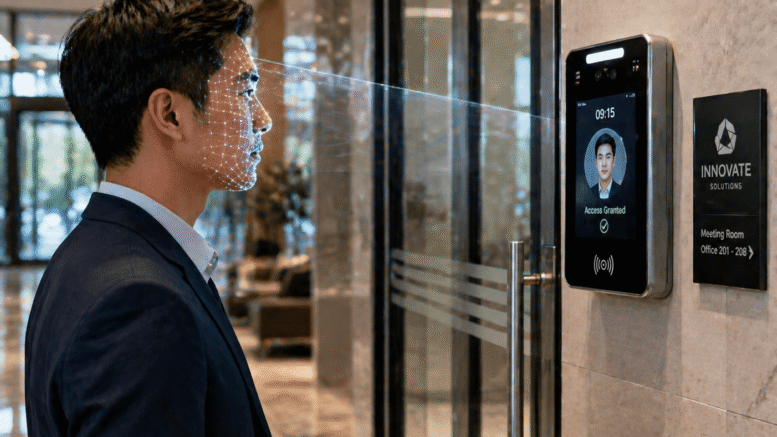
The manufacturing sector in Malaysia has undergone a fundamental shift in how factories manage their workforce. Where paper-based attendance registers and manual timekeeping once dominated the factory floor, an increasing number of manufacturers are now deploying face recognition attendance systems to automate employee tracking, improve security, and eliminate the inefficiencies that older methods created. This trend is accelerating — and for good reason.
Face recognition technology has matured significantly over the past decade. Today’s systems offer fast, contactless identification that works reliably even in challenging factory environments. This article explores why more factories are making the move to face recognition attendance systems, what benefits they deliver, and what to consider when choosing a solution for your facility.
The Limitations of Traditional Attendance Methods in Factories
Before examining why factories are switching to face recognition, it is important to understand why traditional methods are falling short in manufacturing environments.
Fingerprint scanners — the previous generation of biometric attendance — struggle in factories where workers regularly handle chemicals, oils, metal particles, or heavy machinery. Worn or damaged fingerprints lead to frequent authentication failures, causing queues at entry points during shift changes. Card-based systems face a different problem: buddy punching, where one worker clocks in on behalf of an absent colleague, is difficult to prevent and costly to organisations that rely on accurate attendance data for payroll and compliance.
Face recognition eliminates both of these issues with a completely contactless authentication process that cannot be circumvented by proxy punching.
Why Face Recognition Works for Factory Environments
Contactless Operation for Hygienic and Practical Use
Factory workers frequently have dirty, greasy, or chemically exposed hands. Face recognition requires no physical contact at all — employees simply walk past a camera and are instantly identified. This makes the technology far more practical in production environments than fingerprint scanners, and more hygienic in facilities with food safety or cleanroom requirements.
Fast Processing for Shift Changes
During peak shift changeovers, hundreds of workers may need to clock in or out within a short window. Modern face recognition systems process authentication in under one second, enabling high throughput with no queuing. This reduces congestion at entry points and ensures shift changeovers run smoothly without productivity loss.
Elimination of Buddy Punching
Buddy punching — where one employee clocks in for an absent colleague — is a persistent problem in manual and card-based systems. Because face recognition links attendance directly to an individual’s physical appearance, it is impossible for one person to clock in on behalf of another. This alone delivers significant cost savings for factories with large hourly workforces.
Integration with Payroll and Shift Management
Face recognition attendance systems integrate directly with HR and payroll platforms, automatically calculating regular hours, overtime, and shift differentials based on captured attendance data. Managers receive accurate data without manual timesheet processing, reducing administrative workload and eliminating the errors that come with manual data entry.
Key Benefits of Face Recognition Attendance Systems for Factories
Improved Workforce Accountability
When every clock-in and clock-out is linked to a verified identity, employees are more accountable for their attendance. Late arrivals, early departures, and unauthorized absences are immediately visible in the system, allowing managers to address issues promptly rather than discovering discrepancies weeks later during payroll processing.
Enhanced Security at Entry Points
Beyond attendance, face recognition controls who enters the facility. Only enrolled employees and authorized visitors gain access, reducing the risk of unauthorized personnel on the factory floor. This is particularly important for facilities handling valuable materials, proprietary manufacturing processes, or hazardous equipment.
Real-Time Visibility for Shift Supervisors
Supervisors can view real-time dashboards showing which employees are on-site, which are late, and which have not yet arrived. This visibility allows for immediate response — calling in replacement workers, adjusting production schedules, or escalating persistent absenteeism — without waiting for end-of-shift reports.
Accurate Data for Labour Compliance
Malaysian labour law requires accurate records of employee working hours, overtime, and rest periods. Face recognition attendance systems generate tamper-proof logs that satisfy these requirements, protecting factories during audits and reducing the risk of compliance penalties.
Factors to Consider When Choosing a Face Recognition Attendance System
| Consideration | Details |
|---|---|
| Accuracy in Varied Lighting | Factory floors have mixed natural and artificial lighting. Choose systems rated for performance across lighting conditions. |
| Speed per Authentication | For large shift groups, look for systems processing 1,000+ faces per minute to prevent bottlenecks. |
| Environmental Durability | Devices should be rated for dusty, humid, and temperature-variable factory environments. |
| Data Security | Biometric data requires robust encryption and compliant storage under Malaysia’s PDPA. |
| System Integration | Confirm compatibility with your existing HR, payroll, and access control infrastructure. |
Implementation: What to Expect
Rolling out a face recognition attendance system in a factory typically involves an initial site survey to determine camera placement and coverage zones, followed by employee enrollment where each worker’s face is captured and registered in the system. Integration with existing HR and payroll platforms is configured, and supervisors are trained on the management dashboard. Most implementations for mid-sized factories can be completed within a few days, with minimal disruption to production schedules.
Ongoing management is straightforward — adding new employees, updating records for staff transfers, and accessing reports are all handled through the central software platform without requiring specialist technical knowledge.
Conclusion
The shift to face recognition attendance systems in Malaysian factories is driven by practical necessity. As manufacturers face increasing pressure to reduce labour costs, improve compliance, and operate more efficiently, the limitations of older attendance methods become harder to justify. Face recognition offers a reliable, scalable, and hygienic solution that addresses the specific challenges of factory environments while delivering measurable operational benefits.
For factory managers and HR professionals evaluating attendance technology, the question is no longer whether to adopt face recognition, but which system best fits the needs of your facility and workforce.
Frequently Asked Questions (FAQ)
Does face recognition work for workers wearing masks or face coverings?
Modern face recognition systems are increasingly capable of authenticating individuals wearing masks, using additional facial features and advanced algorithms. Many systems can also combine face recognition with temperature screening for added functionality in health-sensitive environments.
How accurate is face recognition attendance compared to fingerprint systems?
In factory environments, face recognition typically outperforms fingerprint systems because it is unaffected by dirty, oily, or damaged hands. Modern face recognition systems achieve accuracy rates above 99.9% under standard operating conditions.
Is face recognition data compliant with Malaysian privacy regulations?
Yes, provided the system is implemented correctly. Biometric data must be stored securely and used only for its stated purpose under Malaysia’s Personal Data Protection Act. Reputable vendors design their systems with PDPA compliance in mind.
How long does it take to enroll an entire factory workforce?
Enrollment is typically fast — a single employee can be registered in under a minute. For a factory with 200 employees, full enrollment can often be completed in a single day with a dedicated enrollment station.
Can the system handle multiple shifts and flexible working hours?
Yes. Enterprise face recognition attendance systems support complex shift patterns, flexible hours, and multiple site locations, with configurable rules for overtime, rest periods, and shift differentials.
To see what makes this product unique, click here :https://www.smartouch.com.my/category/time-clock/biometric-facial/
Smart Touch technology pte ltd , www.smartouch.com.sg +65-63964767, sales@smartouch.com.sg , www.smartouch.com.my +607-3889903 sales@smartouch.com.my