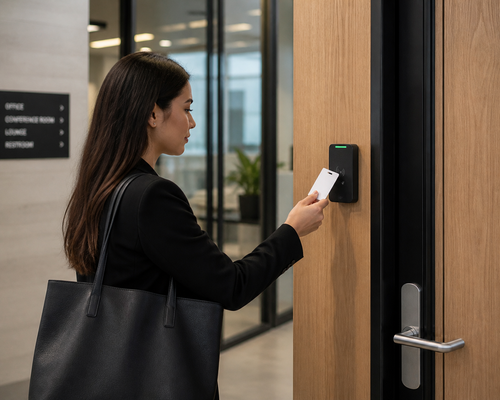
Traditional locks and keys create real risk for modern offices. Keys get copied, lost, or never returned when an employee leaves. A door access control system replaces physical keys with card, mobile, or biometric credentials, giving facility managers precise control over who can enter which areas and when.
This guide explains how door access control systems work, why offices are upgrading from traditional locks, and what features matter most when choosing a solution.
Why Offices Need a Door Access Control System
As organizations grow, managing physical keys becomes increasingly difficult and risky. A door access control system centralizes entry management, giving administrators the ability to grant or revoke access instantly from a single dashboard.
The Risks of Traditional Lock and Key Systems
Lost or unreturned keys force expensive lock changes, and there is no way to know exactly who entered a space or when using a standard mechanical lock.
Growing Security Expectations
Clients, auditors, and insurers increasingly expect offices to demonstrate proper access control, particularly for areas containing sensitive data or valuable equipment.
Key Features of a Door Access Control System
Card, Mobile, or Biometric Credentials
Employees can gain entry using a proximity card, a mobile app, or a fingerprint scan, removing the need for physical keys altogether.
Instant Access Revocation
When an employee leaves the company or loses a credential, administrators can revoke their access immediately from the management dashboard, without needing to physically change any locks.
Detailed Entry Logs
Every entry attempt, successful or denied, is logged with a timestamp and user identity, giving security teams a clear audit trail for every door in the building. This level of detail is particularly valuable when investigating after-hours incidents or verifying compliance with internal security policies.
Benefits of a Door Access Control System
| Benefit | Impact on Your Business |
|---|---|
| Improved security | Only authorized personnel can enter restricted areas |
| Instant credential management | Access can be granted or revoked immediately, no rekeying required |
| Audit-ready records | Entry logs support investigations and compliance reviews |
| Lower long-term costs | Eliminates the recurring cost of replacing lost keys and locks |
How to Choose the Right Door Access Control System
Step 1: Identify Which Areas Need Restricted Access
Map out server rooms, executive offices, and other sensitive areas before deciding how many doors need controlled access points.
Step 2: Choose the Right Credential Type
Decide whether cards, mobile credentials, or biometrics best suit your office culture and security requirements, since each option has different costs and user experience trade-offs.
Step 3: Confirm Integration with Other Security Systems
Look for a system that integrates with CCTV and visitor management platforms so your building’s security data lives in one connected ecosystem.
Best Practices for Door Access Control
- Review access permissions quarterly to ensure only current employees retain entry rights.
- Set up automated alerts for repeated failed entry attempts at sensitive doors.
- Segment access levels by role so employees only reach the areas relevant to their job.
- Keep a backup power plan for electronic locks in case of outages.
Common Mistakes to Avoid
Failing to Offboard Access Promptly
One of the most common security gaps is forgetting to revoke access immediately when an employee resigns or is terminated. Automate offboarding workflows wherever possible.
Overlooking Fire Safety Compliance
Access control systems must still allow safe emergency egress. Confirm your setup complies with local fire safety regulations before installation.
Choosing Hardware Without Local Support
Access control hardware occasionally requires on-site troubleshooting. Choose a vendor with local technicians who can respond quickly rather than relying solely on remote support.
Traditional Locks vs Door Access Control Systems
| Aspect | Traditional Locks | Door Access Control System |
|---|---|---|
| Credential management | Physical keys, hard to track | Digital credentials managed centrally |
| Revoking access | Requires rekeying locks | Instant revocation from a dashboard |
| Audit trail | None | Detailed entry logs for every door |
| Cost over time | Recurring rekeying expenses | Lower long-term maintenance cost |
Planning an Office-Wide Rollout
Moving an entire office from mechanical locks to a digital access control system works best as a phased project rather than an overnight switch. Start with the highest-risk areas, such as server rooms and finance departments, before expanding to general office doors. Running both systems in parallel for a short transition period allows employees to get comfortable with new credentials while giving facilities teams time to resolve any hardware issues. Clear internal communication about how to request a replacement card or troubleshoot a failed scan also reduces helpdesk tickets during the rollout phase.
Key Takeaways
- A door access control system replaces vulnerable physical keys with manageable digital credentials.
- Instant access revocation closes a major security gap left open by traditional locks.
- Detailed entry logs support compliance, audits, and incident investigations.
Conclusion
A modern door access control system gives offices the security, flexibility, and accountability that traditional locks simply cannot match. By replacing physical keys with digital credentials, enabling instant access revocation, and maintaining detailed entry logs, organizations can protect sensitive areas while reducing the ongoing costs of managing lost keys.
If your office is still relying on traditional locks, it is worth exploring how a door access control system can strengthen your security posture.
Frequently Asked Questions
What is a door access control system?
It is a security system that uses cards, mobile credentials, or biometrics instead of physical keys to manage entry into a building or specific rooms.
Can access be revoked instantly?
Yes, most systems allow administrators to revoke a lost or terminated employee’s access immediately from a central dashboard.
Does a door access control system work during a power outage?
Most commercial systems include battery backup or fail-safe mechanisms to maintain security and safe emergency egress during outages.
Can the system integrate with CCTV and visitor management?
Many modern access control platforms support integration with CCTV and visitor management systems for unified building security.
Want to know more about the product? Check it out here : https://www.smartouch.com.my/door-access-system/
Smart Touch technology pte ltd , www.smartouch.com.sg +65-63964767, sales@smartouch.com.sg , www.smartouch.com.my +607-3889903 sales@smartouch.com.my